
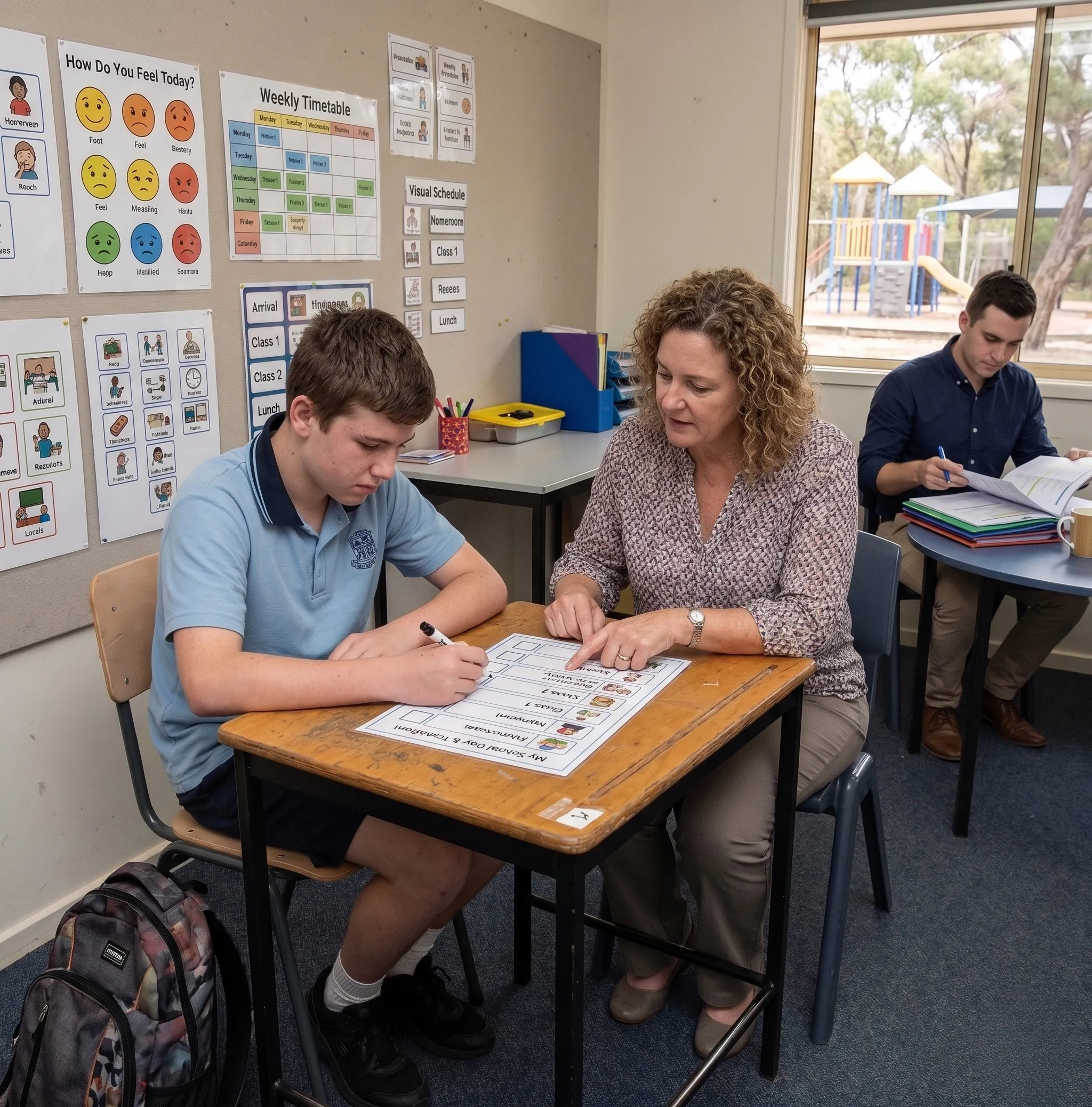
If you have a strong tertiary background in psychology, allied health, education, or social work and wish to make a measurable difference in people's lives, becoming an NDIS Behaviour Support Practitioner is a highly impactful career pathway in Australia.
With demand for positive behaviour support (PBS) growing across regional, metro, and remote communities, qualified practitioners are in high demand. While the NDIS Quality and Safeguards Commission technically does not mandate a tertiary degree as a strict legal prerequisite, most reputable disability providers specifically hire degree-qualified practitioners due to the high clinical complexity, data analysis, and report-writing involved. Here is a clear breakdown of qualifications, provider hiring standards, and registration pathways.
What Does an NDIS Behaviour Support Practitioner Do?
At its core, Positive Behaviour Support (PBS) is about understanding the underlying reasons behind behaviours of concern and putting proactive, skill-building strategies in place to improve a person's overall quality of life. Rather than focusing on simple behaviour management, practitioners focus on human rights, skill development, and environmental modifications.
- Functional Behaviour Assessments (FBAs): Gathering qualitative and quantitative data through interviews, observations, and consultations to identify triggers and functions of behaviour.
- Positive Behaviour Support Plans: Drafting comprehensive, data-informed interim and comprehensive PBS plans outlining proactive strategies and skill-building protocols.
- Reducing Restrictive Practices: Working collaboratively with participant networks to safely reduce or eliminate regulated restrictive practices in compliance with NDIS rules.
- Capacity Building & Coaching: Training carers, support workers, and educators to ensure consistent, neurodiversity-affirming plan implementation.
Summary: Core Requirements for Practice
| Requirement Area | Overview & Educational Standard |
|---|---|
| 1. Tertiary Qualification | While technically not legally mandated by the NDIS Commission, most quality providers strictly prefer tertiary degrees (Psychology, Social Work, OT, Speech Pathology, Developmental Education, Special Education) due to clinical complexity. |
| 2. Professional Experience | Demonstrated experience in health, education, or social services applying assessment, report writing, and clinical analysis skills. |
| 3. NDIS Commission Assessment | Suitability approval granted via either the New Entry-Level Pathway or Experienced Self-Assessment Pathway. |
| 4. Registered Provider Alignment | Active employment or contracting arrangement under NDIS Registration Group 0110 (Specialist Behaviour Support). |
The Pathway to Becoming Registered
Step 1: Understand Educational & Hiring Requirements
Strictly speaking, the NDIS Quality and Safeguards Commission framework does not legally require a tertiary degree to apply for practitioner suitability. However, because behaviour support involves authoring complex clinical reports, conducting risk assessments, and performing quantitative data analysis, the overwhelming majority of registered NDIS providers will only hire candidates with relevant tertiary qualifications (such as Psychology, Social Work, Occupational Therapy, Speech Pathology, Developmental Education, or Special Education). Postgraduate/Master's degrees are particularly valued by established providers like Edulink.
Step 2: Gain Relevant Sector Experience
Practical experience applying clinical reasoning, observational analysis, and goal planning in healthcare, education, or disability services provides the essential foundation required to write effective behaviour support plans and support participant networks.
Step 3: Apply for NDIS Commission Suitability Assessment
To develop, lodge, or oversee behaviour support plans under the NDIS, you must be assessed as suitable by the NDIS Quality and Safeguards Commission. Depending on your experience, you will apply through one of two official pathways:
Pathway 1: New Entry-Level Practitioners
If you are new to positive behaviour support and do not yet have a portfolio of PBS work, you apply via the entry-level pathway:
- Submit your resume, certified copies of qualifications/transcripts, and evidence of transferable clinical skills.
- Provide a professional development plan addressing all seven domains of the Positive Behaviour Support Capability Framework.
- Secure a formal supervision agreement with a Proficient-level (or above) practitioner for ongoing oversight.
- Submit a declaration confirming your entry-level status.
If approved, you begin practicing under supervision. Within 12 months, you must complete a formal reconsideration process—including a self-assessment starting from Core level, supervisor endorsement, and updated evidence—to receive your permanent practitioner level.
Pathway 2: Experienced Practitioners (Self-Assessment Pathway)
If you have demonstrated experience developing and implementing positive behaviour support plans, you apply via the self-assessment pathway:
- Complete a self-assessment against the PBS Capability Framework at your target practitioner level.
- Submit a portfolio of evidence (including FBAs, interim/comprehensive PBS plans, risk assessments, and supervision logs).
- Obtain formal supervisor endorsement via the Supervisor Endorsement Tool.
- Provide your curriculum vitae, learning goals, and supervision records for direct placement across Capability Levels.
Step 4: Work Under an NDIS Registered Provider
Individual suitability approval is granted to you as a practitioner, but you cannot issue or lodge official NDIS behaviour support plans independently unless you operate under an organisation registered under NDIS Registration Group 0110 (Specialist Behaviour Support).
NDIS Practitioner Capability Levels
- Core Practitioner: Entry-level tier. Core practitioners conduct basic assessments and draft plans under direct supervision of an Advanced or Specialist practitioner.
- Proficient Practitioner: Operates independently on standard cases. Capable of completing FBAs, drafting interim/comprehensive PBS plans, and coaching support teams.
- Advanced Practitioner: Handles complex cases involving intricate behaviours of concern or multiple regulated restrictive practices, while providing clinical supervision to peers.
- Specialist Practitioner: Demonstrates high-level clinical expertise, sector leadership, research contribution, and mentoring capabilities across complex participant needs.
Frequently Asked Questions
Looking for PBS Services or Practitioner Collaboration?
Edulink Support Services provides telehealth Positive Behaviour Support, Functional Behaviour Assessments (FBAs), and Developmental Education across Australia. Explore our Online NDIS Behaviour Support Services or get in touch with Leigh De Silva today.